
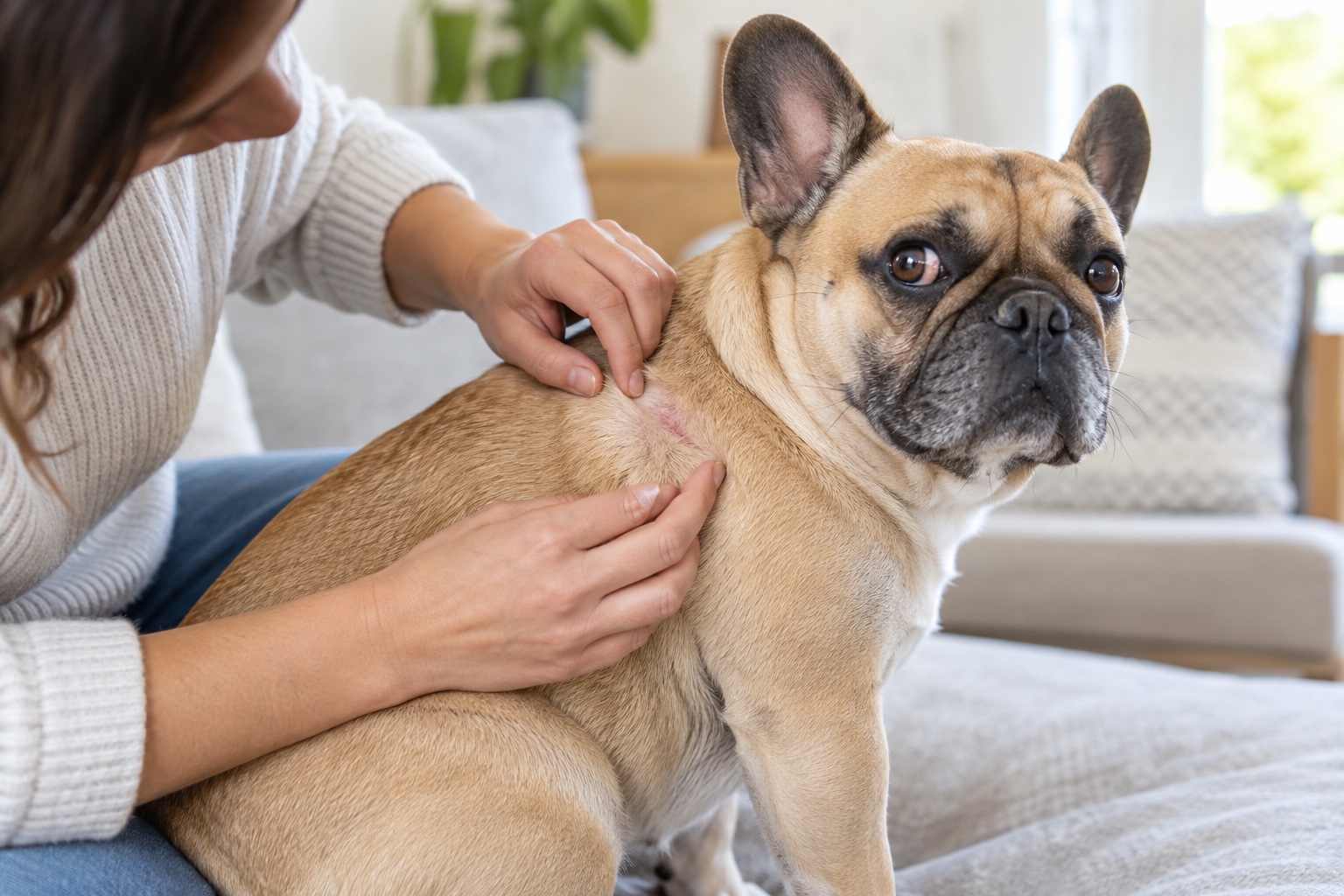
What allergy signs can look like
In dogs, allergic skin disease often shows up as itch: scratching, licking or chewing the paws, rubbing the face, or recurrent skin or ear irritation. You might notice redness, hair loss, odor or discharge after repeated scratching. These signs are not specific to allergies; parasites, infection and other skin conditions can look similar.
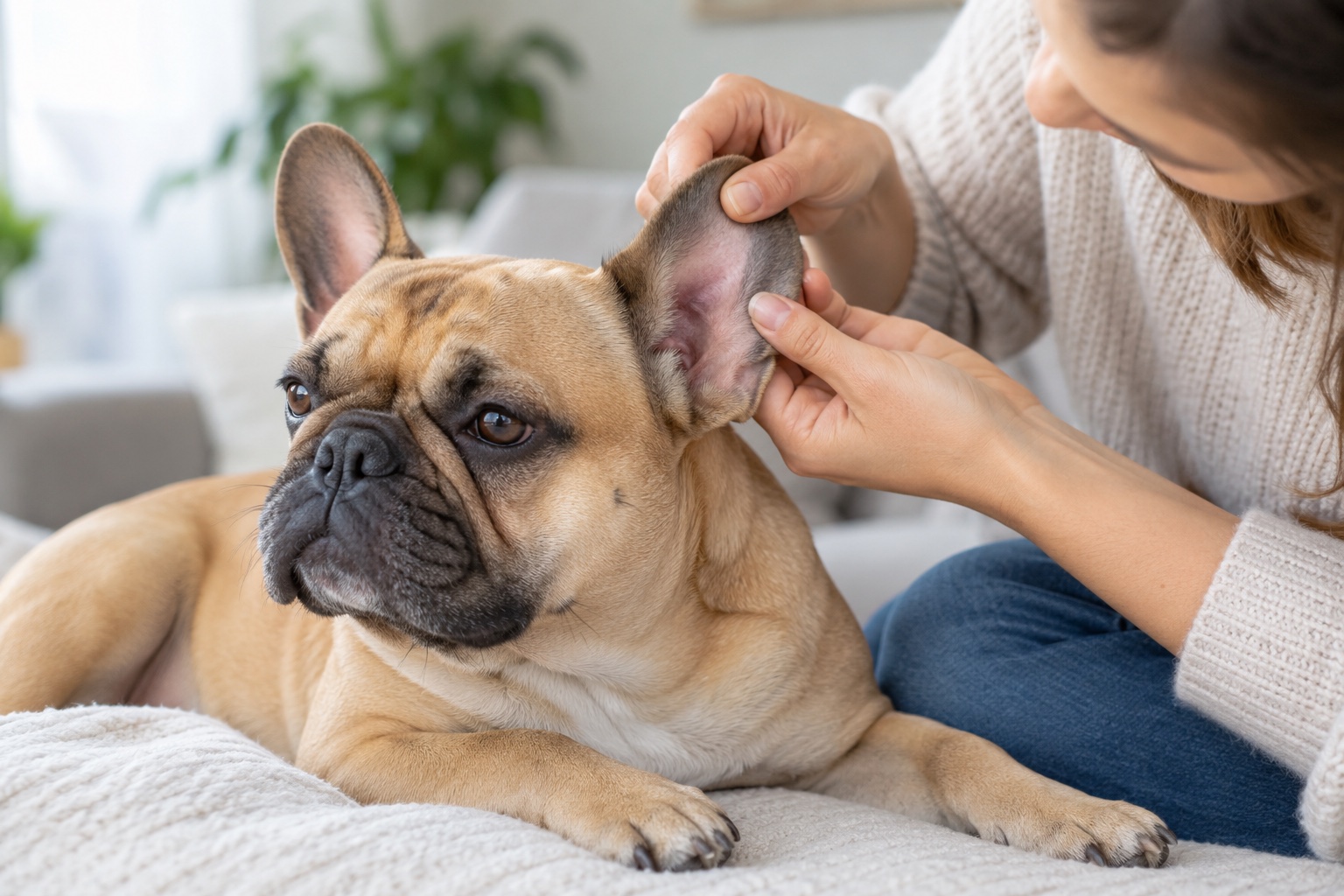
In French Bulldogs, pay attention to changes around the paws, face, skin folds and ears. Note what you see rather than trying to identify the cause from appearance alone. Seek veterinary advice if the problem is persistent, returning, painful or affecting sleep and daily comfort.
Different causes can look alike
Common categories veterinarians consider include environmental allergy (atopic dermatitis), reactions to flea bites, and adverse food reactions. A dog may also have more than one factor at once. Signs can be seasonal or present throughout the year, and recurring ear or skin infections may complicate the picture.
Food-related itch cannot be confirmed by switching foods casually or by a photograph. According to the Merck Veterinary Manual, the reliable way to confirm a food allergy is a veterinarian-directed elimination diet followed by a controlled challenge. Follow the clinic’s exact plan; treats, flavored medicines and supplements can affect a trial.
Sources: Cornell University · Atopic dermatitis · Merck Veterinary Manual · Food allergy in animals · Merck Veterinary Manual · Flea allergy dermatitis .
A simple itch and exposure diary
A short, consistent record can reveal a pattern that is hard to remember at an appointment. Once or twice a day, note:
- which areas your Frenchie scratched, licked or rubbed, and how often;
- when the problem started, whether it changes by season, and how it affects sleep or activity;
- new foods, treats, chews, supplements, shampoos or household products;
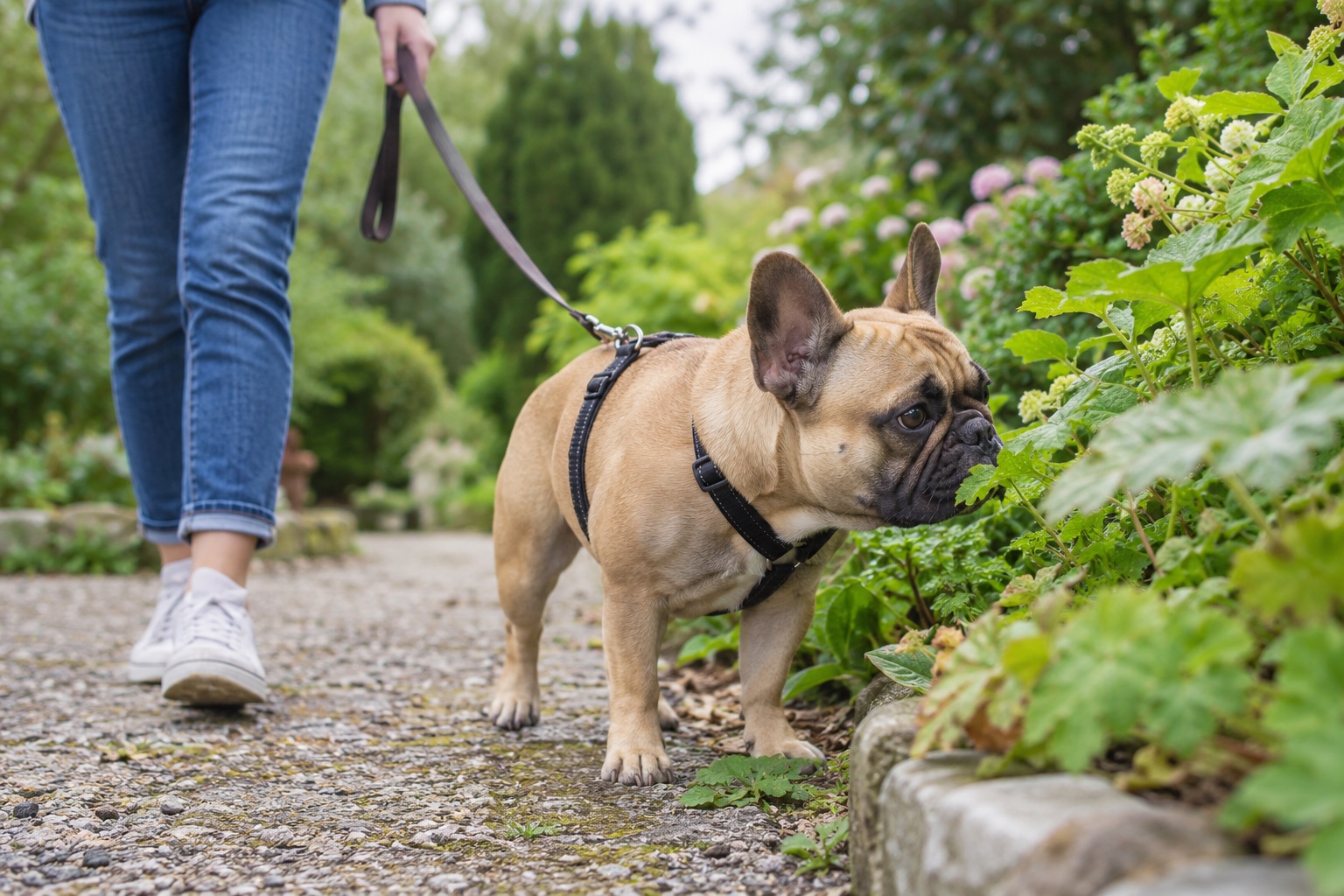
- walks, time outdoors, flea-prevention dates and any recent travel;
- ear odor or discharge, skin changes, and previous treatments or response.
Photos taken in similar light can document visible changes over time. Keep original dates and do not delay care to collect a longer record. Bring product labels and the names of any medicines to your appointment.
How a veterinarian investigates allergies
Your veterinarian may ask when the signs began, examine the skin and ears, and check for other causes such as parasites or infection. Depending on the history, they may recommend skin or ear tests, parasite control, treatment of infection, or a structured food trial. There is no single home test that identifies every cause.
Allergy testing is used in selected cases to help guide environmental allergen immunotherapy after a clinical diagnosis; a positive test by itself does not prove that an allergen is causing your dog’s signs. Ask what each proposed test can and cannot tell you, how long the plan takes, and when to review progress.
Source: Merck Veterinary Manual · Atopy and allergic reactions in dogs .
Comfort measures and when to get urgent help
Use medicines, skin products and ear cleaners only as directed for your dog. Avoid starting a new diet, giving human antihistamines or applying leftover creams without veterinary guidance. Your veterinarian can choose care based on the cause, severity, infections and your Frenchie’s other health needs.
Get urgent veterinary help if a sudden reaction includes facial swelling, repeated vomiting, weakness, collapse or difficulty breathing. For ongoing itch, sores, worsening redness, head shaking or recurring ear odor, contact your regular clinic for an appointment.
Common questions
Can I tell whether my Frenchie is allergic to food?
Not from symptoms alone. Food allergy can resemble environmental or flea-related disease. A veterinarian may recommend a strict elimination diet and controlled challenge if the history makes it appropriate.
Are blood or saliva tests enough to diagnose food allergy?
No. These tests are not a reliable way to confirm food allergy in dogs. Ask your veterinarian what testing is suitable for the specific question being investigated.
Should I change my dog’s food right away?
Talk with your veterinarian first. An unplanned change may not answer the question and can make a later diet trial harder to interpret.