
Why the number is not enough
Two French Bulldogs can weigh the same and have different body conditions. A compact, muscular dog may weigh more than a smaller-framed dog while being in healthy condition. Puppies are growing, adults change over time, and health or medication can also affect weight.
Use weight as a trend to discuss, not a verdict. A sudden or unexplained change matters even if the number still looks familiar. Your veterinarian can interpret the scale alongside your dog’s shape, muscle condition, life stage and health history.
A simple way to think about body condition
Veterinary teams commonly use a Body Condition Score (BCS), often on a 9-point scale, alongside a hands-on assessment. The WSAVA chart describes three useful views: feel the ribs, look down from above, and look from the side. It is a conversation starter, not a home diagnosis.
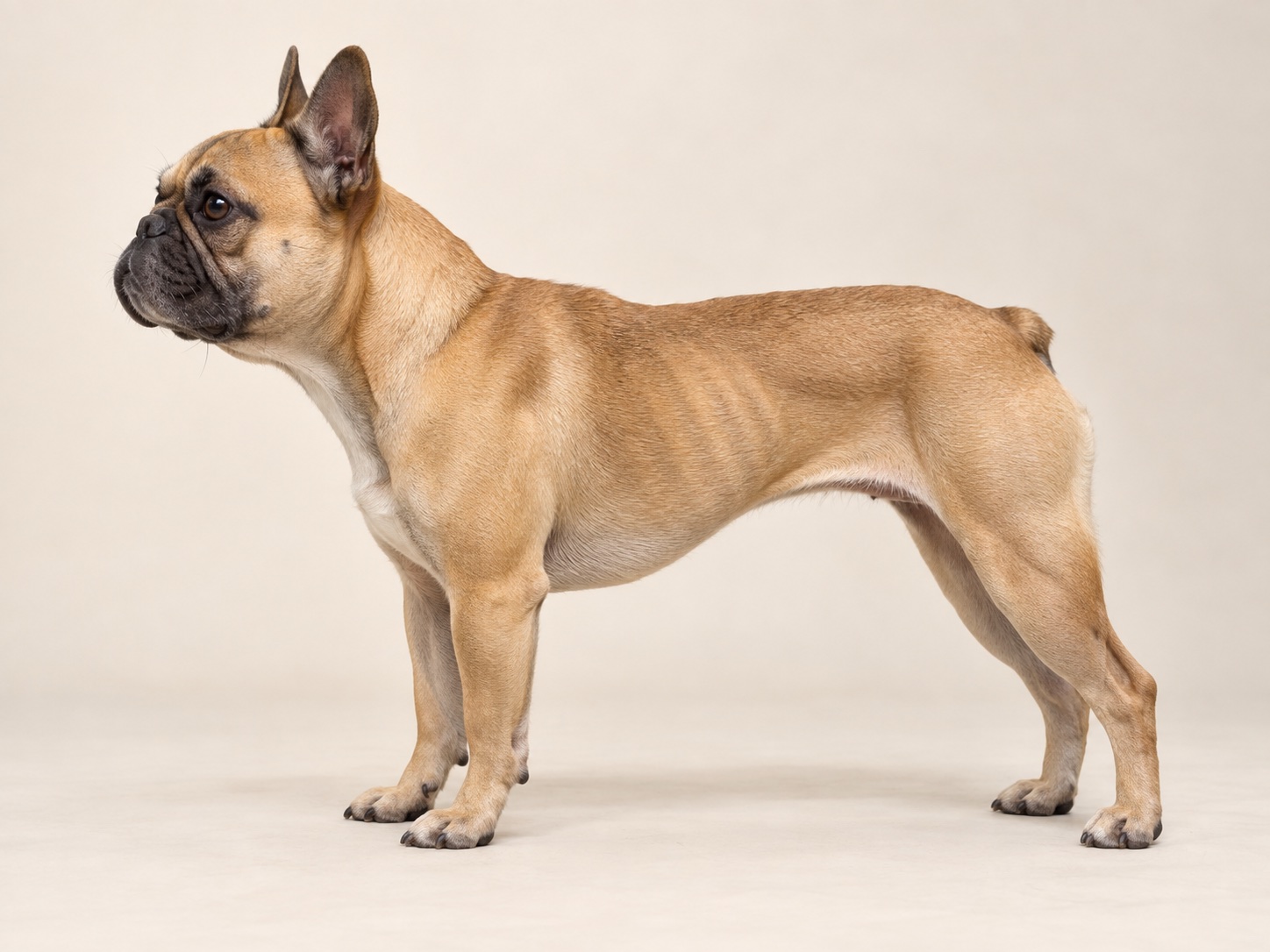
More tucked
Ribs may be easy to see or feel; the waist and abdominal tuck can look pronounced. Ask your vet about low body condition and muscle.
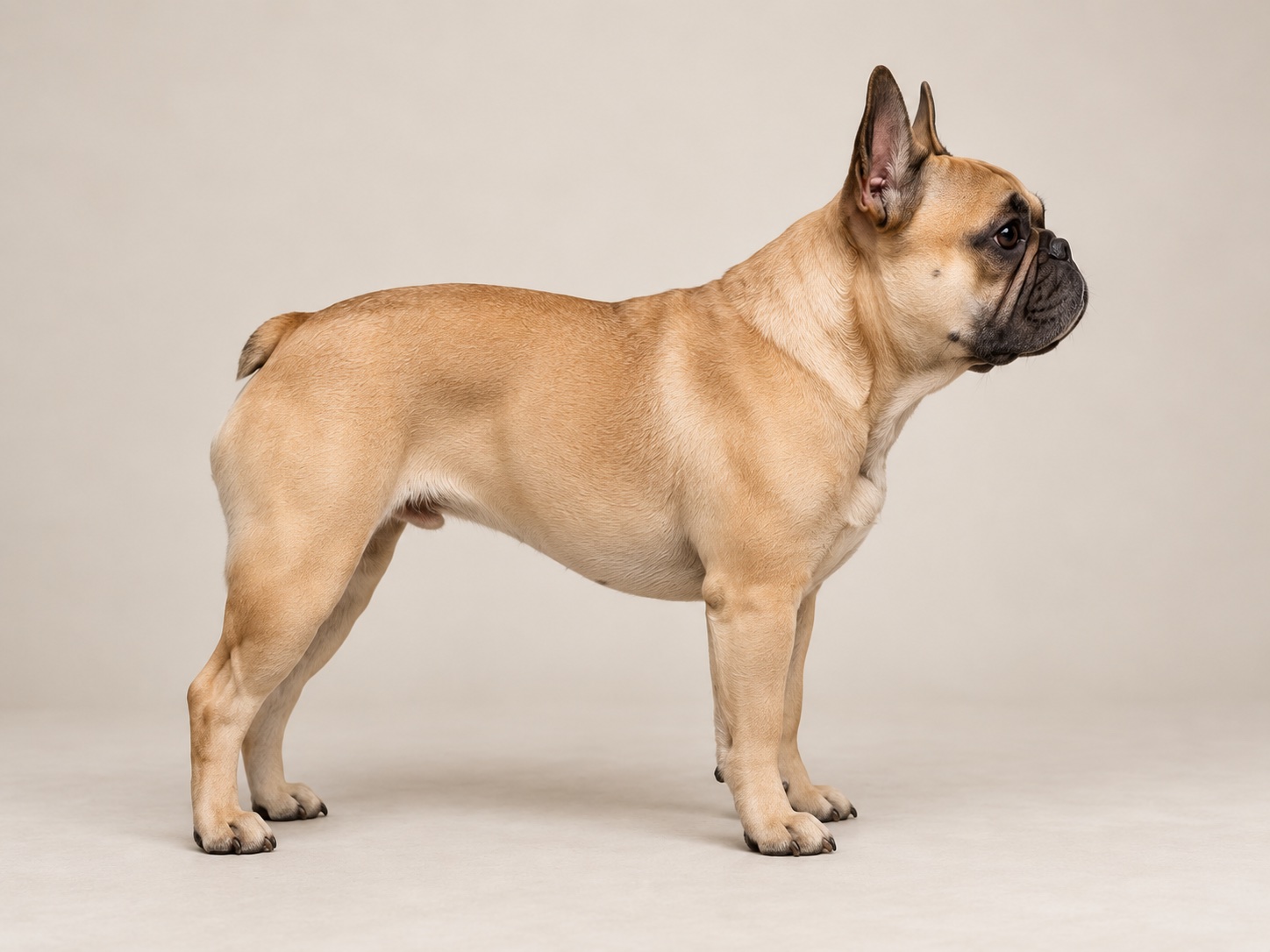
Waist visible
Ribs can be felt without a thick fat covering, with a waist from above and a gentle abdominal tuck from the side. Your vet confirms the score.
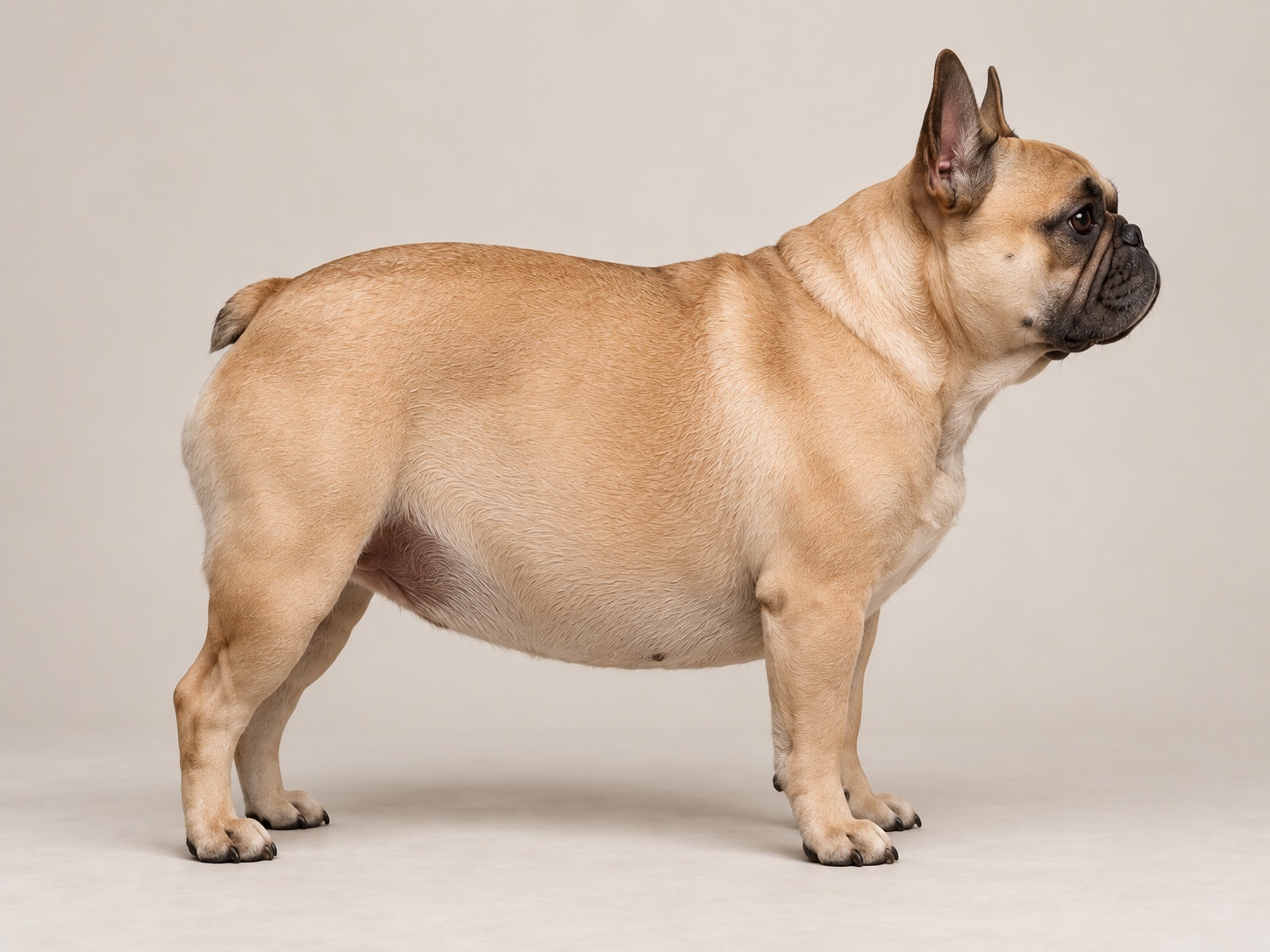
Waist less visible
Ribs can be harder to feel and the waist less distinct. This is a reason to ask your vet to assess body condition, not to start a crash diet.
Coat, posture and body shape can hide clues; use the WSAVA Body Condition Score chart and ask your veterinary team to show you how to assess your own dog.
Feel
With gentle pressure, can you feel the ribs under a light covering? Don’t press hard or use this as a diagnosis.
Look from above
Is there a waist behind the ribs, or does the body appear similarly wide throughout?
Look from the side
Does the abdomen rise toward the hind legs, or hang level with or below the chest?
French Bulldogs have a distinct build, so visual checks alone can mislead. Ask your veterinarian to demonstrate the BCS and, when relevant, a Muscle Condition Score too. Body fat and muscle are related but different observations.
What to track between visits
Consistent notes make changes easier to spot and give your veterinarian something concrete to interpret. Keep:
- the date, weight and unit, measured on the same scale when practical;
- the food and approximate portion offered, plus treats, chews, toppers and table scraps;
- changes in appetite, activity, daily routine or medication;
- any weight or body-condition feedback and goals from the vet.
Measure food with the method your veterinarian recommends and note any extras. Treats and training rewards count toward the day’s intake; your vet can help plan how to include them.
Make a safe plan with your vet
If your Frenchie needs to gain or lose weight, ask for a goal and a follow-up plan tailored to them. Helpful questions include:
- What body-condition and muscle scores do you see, and can you show me why?
- What weight range or trend is appropriate for my dog, given their age and frame?
- How should I measure meals and account for training treats or chews?
- When should we recheck weight and body condition?
- Could a health issue or medication be affecting the change?
Avoid abrupt food restriction, skipped meals, human weight-loss products or a calorie target copied from another dog. Growing puppies, dogs with medical conditions and dogs already underweight need individual veterinary guidance. Do not delay a vet conversation if the change is sudden or unexplained.
What does the Frenchie research say?
A large UK VetCompass study compared French Bulldogs with other dogs using veterinary records. In that study population, French Bulldogs had lower recorded odds of obesity than non-French Bulldogs. That does not mean an individual Frenchie cannot become overweight, and it does not make a breed-average weight a healthy target. It is a reminder to assess the dog in front of you rather than assume from the breed.
The study describes dogs seen in participating UK veterinary practices and is not a universal estimate for every country or Frenchie. Your veterinarian’s assessment and your dog’s own record are more useful for individual decisions.
Source: O’Neill et al., French Bulldogs differ to other dogs in the propensity for many common disorders: a VetCompass study (2021). For body condition guidance, see the WSAVA Global Nutrition Guidelines and tools.
Common questions
What is the ideal weight for a French Bulldog?
There is no single ideal number that fits every Frenchie. Ask your vet to consider body condition, muscle, frame, age and health together.
Can I tell if my Frenchie is overweight by looking?
Looking from above and the side can provide clues, but coat, posture and Frenchie body shape make visual guesses unreliable. A veterinarian can teach you to feel ribs and assess body condition.
Should I reduce food if the scale goes up?
First discuss the trend with your veterinarian, especially if the change is rapid or unexplained. They can set an appropriate goal and feeding plan for your dog.